May 9th – Took a grab taxi to Intramuros, the Spanish walled city built in 1571, that served as the center of the Spanish empire in Asia. My arrival was met by some local youths doing their best to hustle me into a tuk-tuk tour. I let them know I was looking forward to the walk, to which they declared it was impossible to walk the 64 ha site and my safety would be at risk walking through the residential neighborhoods. To ensure nothing horrible happened to be, they insisted I walk in the opposite direction, which I obliged, turning back a block later to walk though the dangerous neighborhood which was completely safe.
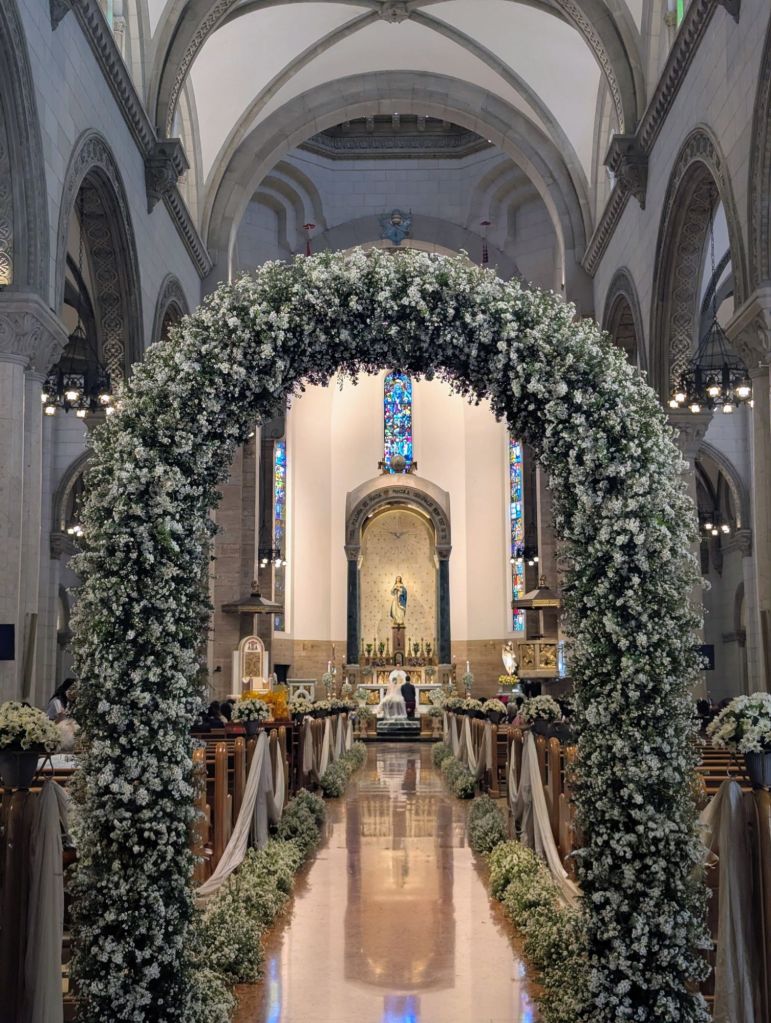
I soon arrived at the Manila Cathedral in time to witness a couple declare their vows. With Spanish colonialism came Catholicism which is still the predominant religion, although I believe prior to the Spanish, the locals were predominantly Muslim.
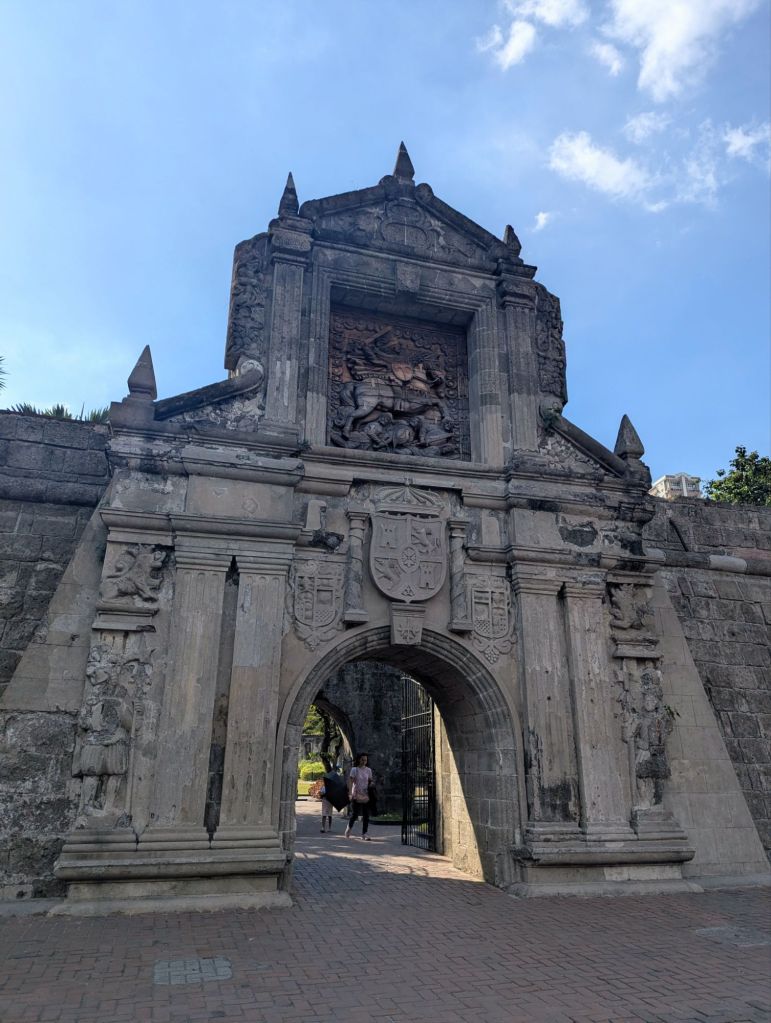
Gate decorated by a wooden carving depicting Santiago Matamoros (St.James the Moor-Slayer), patron Saint of Spain, and the cost of arms of Castile and Leon. Coincidently, I have aspirations to walk the pilgrimage Camino Norte which ends at Santiago de Compostela.
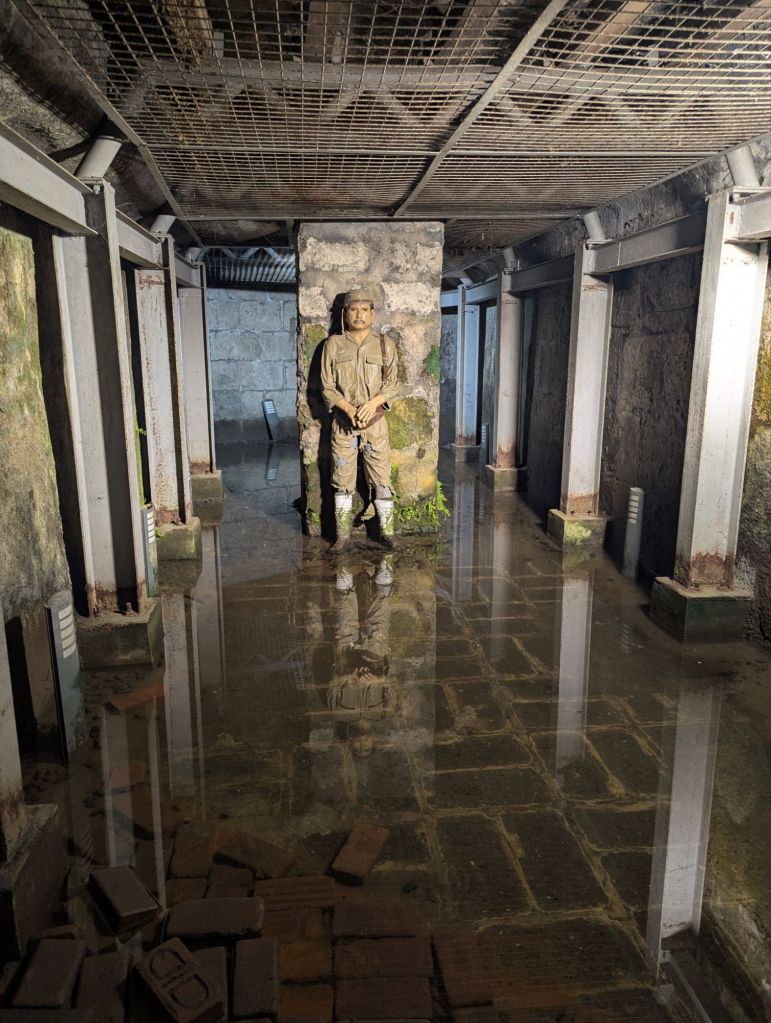
The original Spanish munition storage facility turned out to be too damp for powder, so an above ground structure was built and the underground structure repurposed to a dungeon. During WW2 the Japanese occupied the Fort and used the dungeon to imprison American soldiers. Following the battle of Manila in 1945 about 600 American prisoners died in the dungeon from suffocation and hunger. The Japanese also razed much of Manila and slaughtered over 100,000 Filipinos as they retreated. The images of the city reminded me of recent images from Gaza. The things we do to each other.
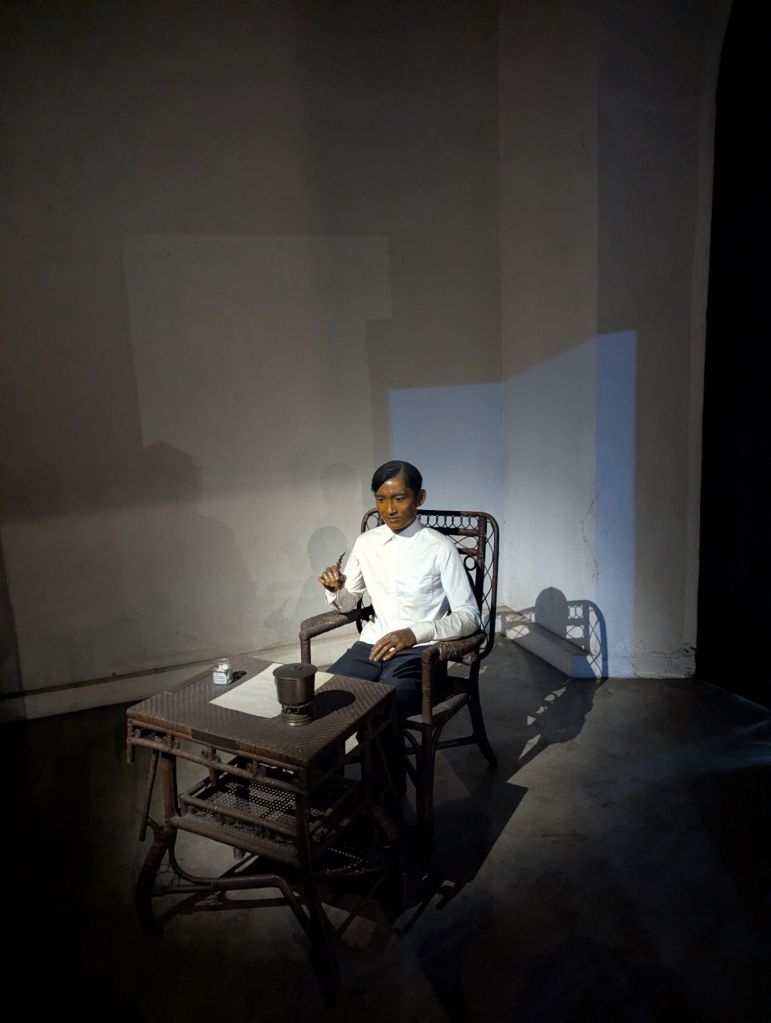
Jose Rizal was also held at Fort Santiago prior to his execution in 1896. There is a museum on the site dedicated to Rizal. He was certainly an incredibly talented person, an ophthalmologist, writer, poet, painter, sculpture, anthropologist, spoke several languages and a revolutionary in the eyes of the Spanish. Certainly inspired me to learn more about Rizal and Philippine history.
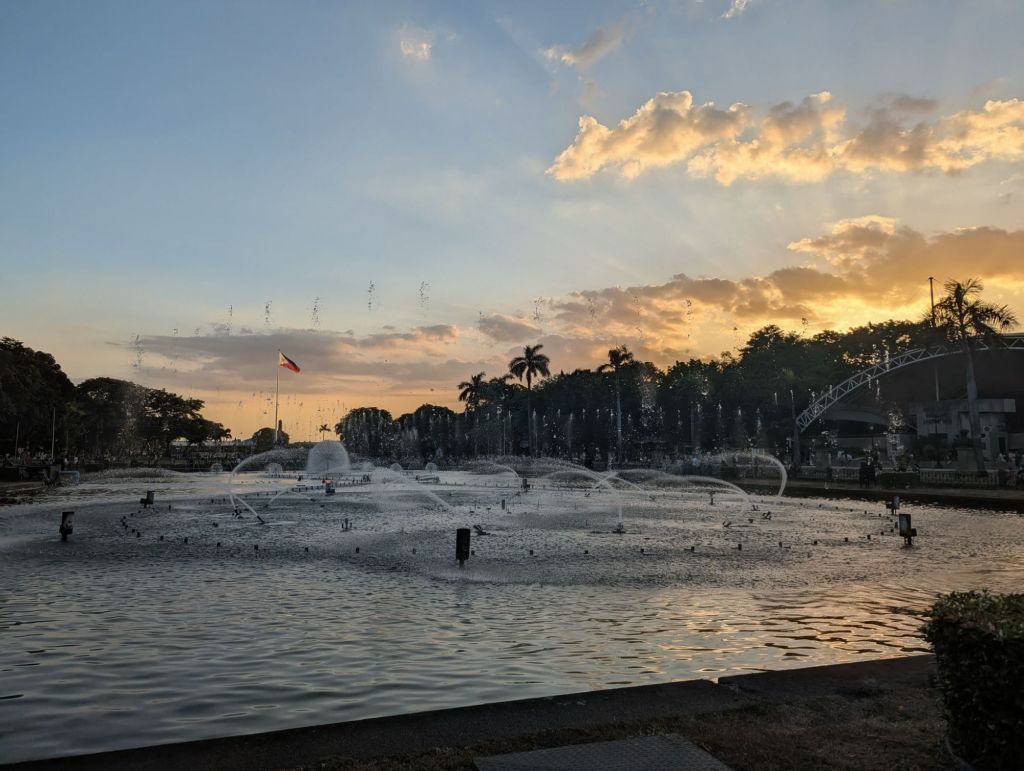
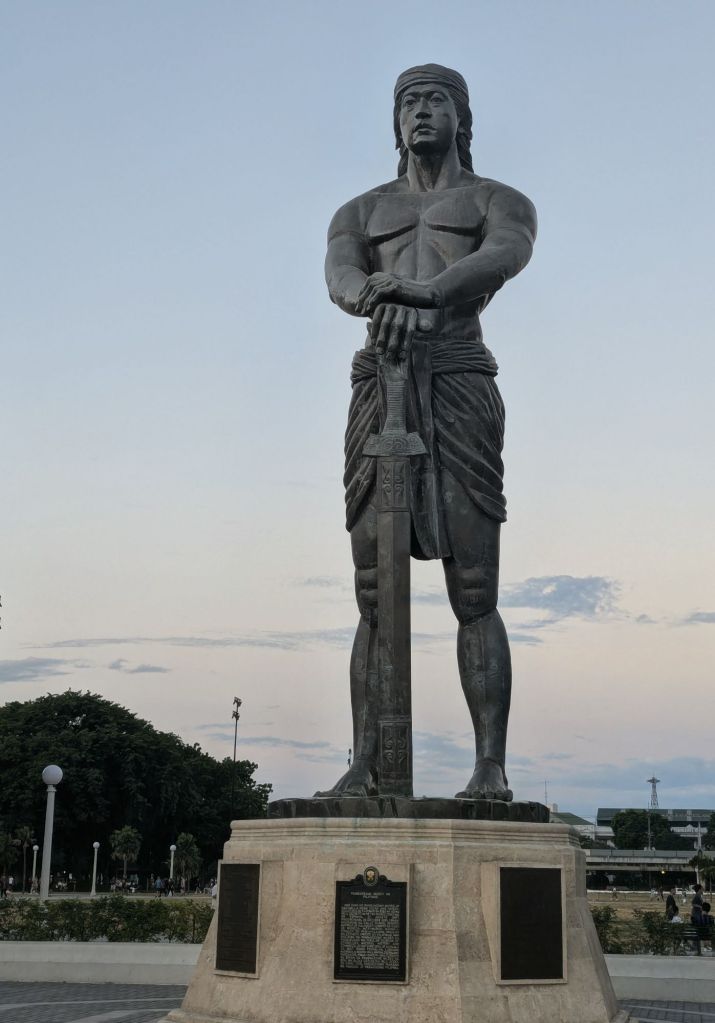
I walked out of Intramuros towards Rizal park where there was a celebration taking place. The Sun was setting and across the park was a large statue of Lapulapu the first Filipino hero who opposed the Spanish in 1521 killing Ferdinand Magellan.
 Spentitall Travelling
Leave a comment